
How PADNOS Created Sustainability City and Achieved Industrial-Scale Waste Diversion Across West Michigan
March 14, 2022
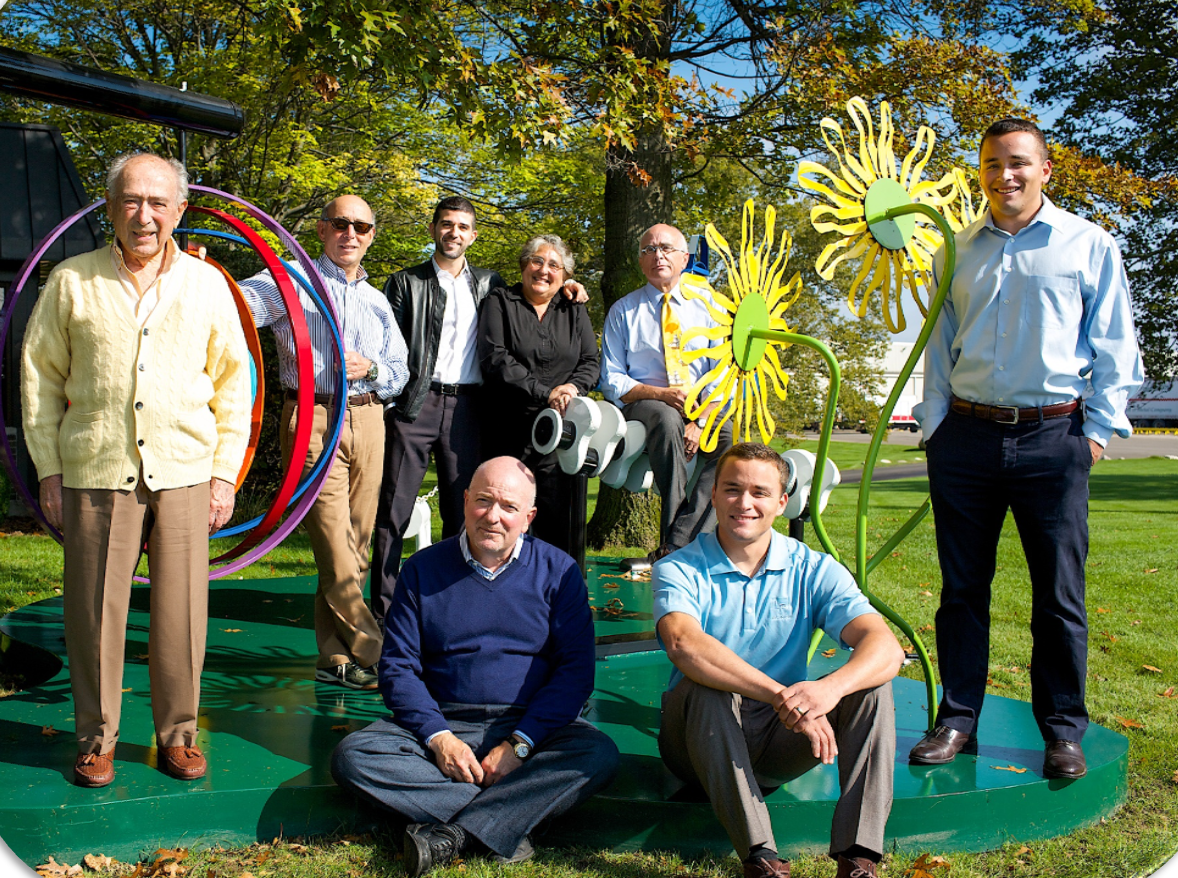
PADNOS, a fourth-generation, family-owned recycling company based in Holland, Michigan, has been converting discarded materials into reusable resources for more than a century. Founded in 1905, PADNOS now processes approximately four billion pounds of scrap paper, plastics, metals, and electronics annually across 26 locations in Michigan and Indiana, playing a critical role in advancing circular economy solutions throughout the region.
As sustainability pressures increase for manufacturers and other large organizations, PADNOS recognized that many businesses struggled to recycle effectively due to constraints such as load size, sorting complexity, and limited space. These challenges often led to recyclable materials being landfilled or stockpiled on-site. In response, PADNOS expanded its role from recycler to strategic partner, helping customers overcome operational barriers and meet carbon and waste reduction goals.
“A lot of companies today are under pressure to reduce their carbon footprint,” says Kari Bliss, Principal Sustainability at PADNOS. “They want to increase recycled content and reduce landfill waste, but they aren’t always sure how to get there. We saw an opportunity to help our customers reach those objectives while keeping valuable materials in circulation.”
Sustainability City Turns Recycling Challenges into Circular Solutions
The PADNOS Sustainability Team works at the intersection of education, advocacy, and innovation. The team supports customers across industries by reviewing recycling operations, navigating legislative considerations, and helping OEMs and suppliers align recycling programs with corporate sustainability goals.
One example of PADNOS’ problem-solving approach involved a major Michigan retailer struggling with excess pharmaceutical pill bottles. The white HDPE bottles posed multiple challenges: large volumes beyond local recycling capacity, multiple material components, and limited end markets due to color contamination.
Rather than sending the material to landfill, the PADNOS team identified a local circular solution. The bottles were pelletized and supplied to an existing PADNOS customer that manufactures counterweights for office furniture used by several West Michigan companies. As a result, recycled pill bottles are now embedded in furniture components produced and used within the region, keeping material value local.
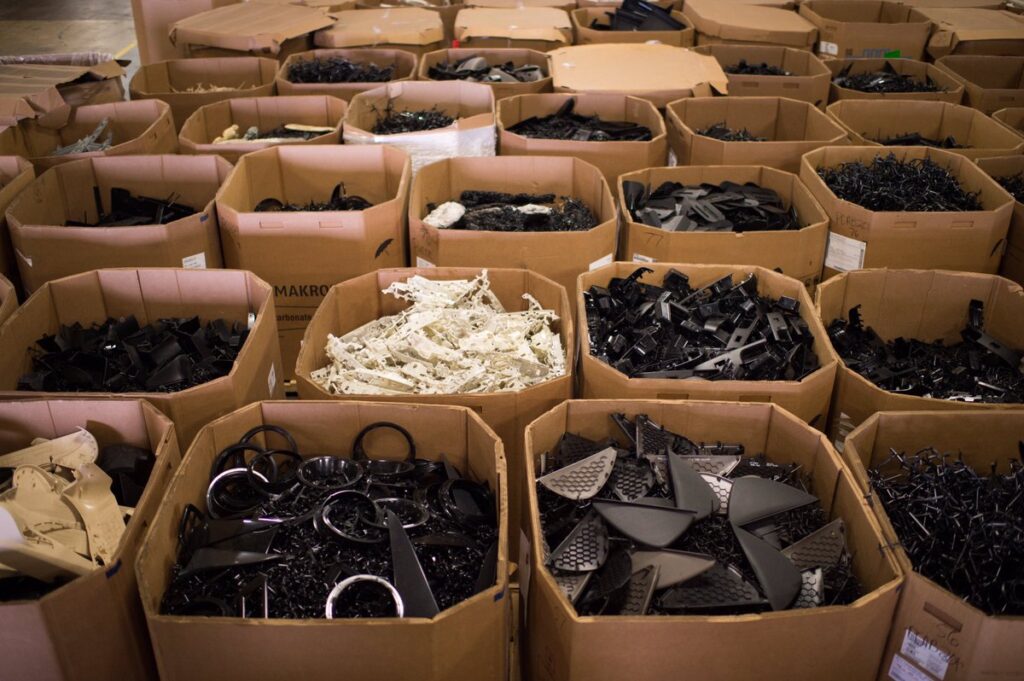
In 2021, PADNOS formalized this collaborative approach with the opening of Sustainability City, an 18,000-square-foot learning and innovation center in Grand Rapids. The facility is dedicated to helping customers explore recycling solutions tailored to their specific material streams and operational constraints.
Before visiting Sustainability City, customers often begin with an on-site assessment by the PADNOS team. These visits allow staff to understand challenges related to labor, space, and sorting before materials ever reach a recycling facility. Customers are then invited to Sustainability City to work hands-on with PADNOS experts to identify viable recycling pathways.
Since opening its doors, Sustainability City has welcomed customers ranging from automotive and furniture manufacturers to universities and national research labs. Through this work, PADNOS has helped divert millions of pounds of industrial waste from landfill into productive reuse, demonstrating the economic and environmental value of circular solutions.
About PADNOS
PADNOS is a fourth-generation, family-owned recycling company headquartered in Holland, Michigan. Founded in 1905, the company processes paper, plastics, metals, and electronics at 26 locations across Michigan and Indiana, converting billions of pounds of scrap each year into reusable resources.
Sustainable Business of the Year Award
PADNOS was recognized in 2022 by the West Michigan Sustainable Business Forum for its leadership in advancing circular economy solutions, industrial recycling innovation, and customer education through Sustainability City.
About Circular Economy Solutions
Industrial circular economy practices focus on keeping materials in use, developing local end markets, and reducing landfill dependency. MiSBF promotes these practices because they reduce environmental impact, strengthen regional supply chains, and help businesses meet sustainability goals while remaining competitive.