
How Aquinas College, Zero Waste Success Affirms Sustainability Commitment and Inspires More Initiatives
March 12, 2016
As a Catholic liberal arts college rooted in the Dominican tradition, Aquinas College views care for the earth as both a moral responsibility and a defining element of campus culture. Located on 117 acres of forest just east of downtown Grand Rapids, Aquinas has demonstrated a commitment to environmental stewardship since its founding in 1886, a commitment that continues to shape operations, academics, and community engagement today.
Sustainability efforts at Aquinas are led by the Center for Sustainability and grounded in the College’s mission to graduate students who understand the environmental, social, and economic dimensions of decision-making. One of the most ambitious of these efforts is Aquinas’ goal to achieve campus-wide zero municipal solid waste.
Embedding Zero Waste into Campus Culture and Curriculum
Aquinas College defines zero waste using the standards of the Zero Waste International Alliance (ZWIA), which emphasizes responsible production, reuse, and recovery of materials without practices that harm human or environmental health. For Jessica Bowen, Director of Sustainability at Aquinas, this definition is essential to ensuring the College’s waste diversion efforts align with circular economy principles.
“This becomes important in a circular economy model,” Bowen explains, “because we aren’t considering toxic substances diverted even if they are recycled.”
Guided by this approach, Aquinas has made education a central strategy for reducing waste. Persistent waste-sorting education, combined with system-wide operational changes, has increased the College’s diversion rate from 45% in 2012 to 70% today. Over the same period, total landfill-bound trash has been reduced from 230 tons per year to just 70 tons annually. Waste sorting has become an expected and visible part of campus life, reinforcing sustainability as a shared responsibility rather than a niche initiative.
Sustainability education also plays a formal role in the classroom. Awareness of how individual actions impact the environment is now a learning outcome embedded in Aquinas’ general education requirements, ensuring every graduate leaves with foundational knowledge of sustainability and systems thinking.

Recognition and Investment in Long-Term Impact
Aquinas’ leadership in waste reduction and sustainability has earned recognition at the state and national level. The College ranked 12th nationally and second in Michigan in the 2020 RecycleMania competition, a benchmarking program for campus recycling and waste reduction. In 2016, Aquinas was named Sustainable Business of the Year by the West Michigan Sustainable Business Forum.
The College has also received a Silver rating twice in the past four years through the Association for the Advancement of Sustainability in Higher Education (AASHE) STARS program. Aquinas earned particularly strong scores in academics and campus engagement, reflecting the integration of sustainability into both learning and daily campus operations.
Recent capital investments further demonstrate Aquinas’ long-term commitment. A $32 million expansion and renovation of the Albertus Magnus Hall of Science resulted in a LEED Silver–certified facility featuring a green roof, flexible modern laboratories, collaborative learning spaces, and a three-story glass atrium. The capital campaign also funded the Wege Institute for Sustainability and Economicology (WISE) and established a new Dean of Sciences and Sustainability role, strengthening institutional leadership around sustainability.
Sustainable Business of the Year
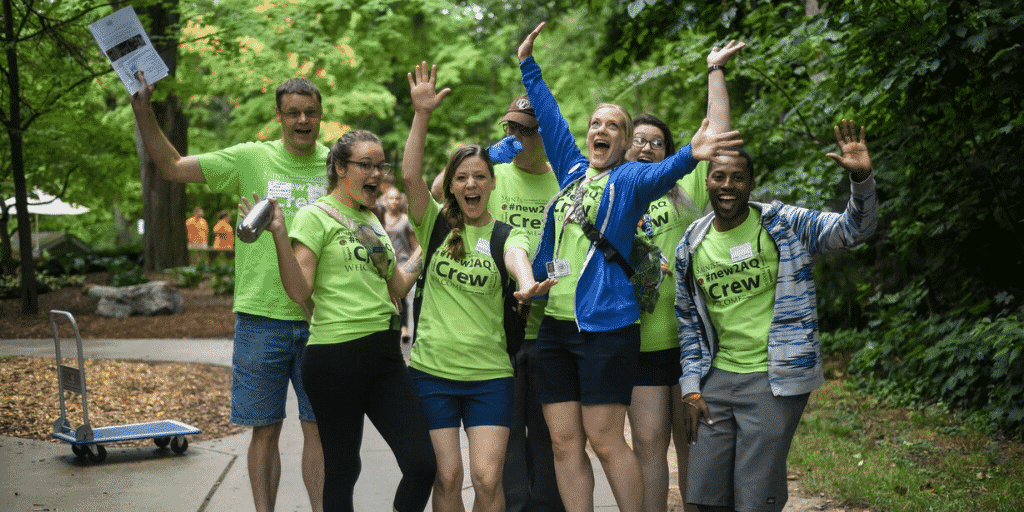
Aquinas College was named Sustainable Business of the Year by the West Michigan Sustainable Business Forum in 2016 in recognition of its leadership in waste reduction, education, and campus sustainability.
About Circular Economy Solutions
Zero-waste and circular economy practices conserve resources, reduce environmental harm, and foster systems thinking. MiSBF supports these approaches for their ability to deliver environmental, social, and economic benefits while building long-term resilience.