Materials Management Forum Highlights Circular Economy Opportunity in Central Michigan
February 13, 2026
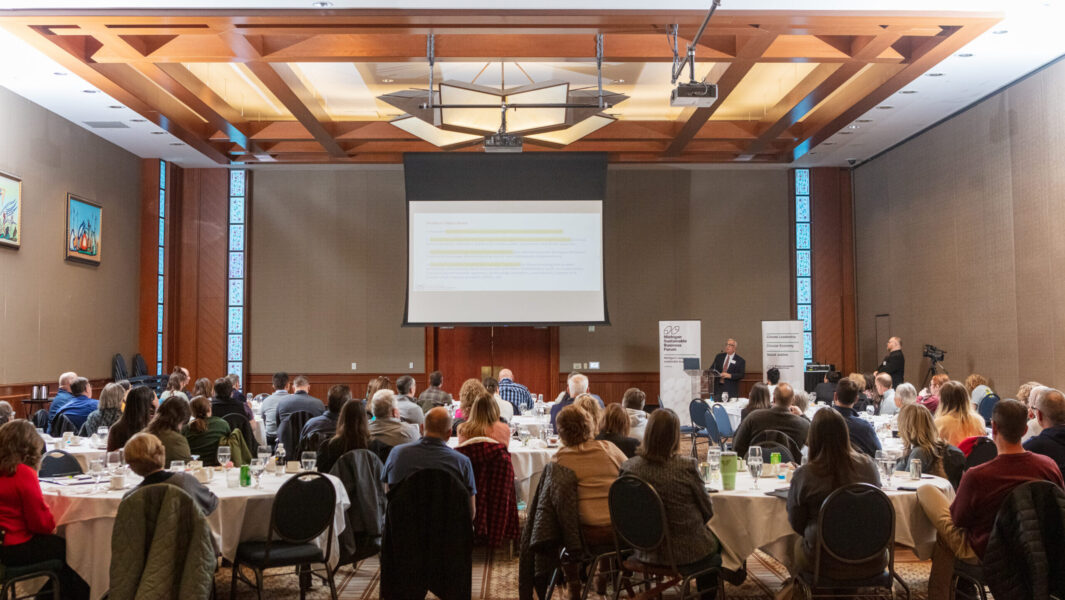
The eight counties of the Heartland Materials Management Planning Committee in Central Michigan will dispose of as much as $170 million of marketable commodities in its landfills over the next decade, approximately 220,000 tons of municipal solid waste each year. The Forum hosted the first in a series of events on materials management and food waste in Mt. Pleasant last week at Soaring Eagle Casino in collaboration with the Saginaw Chippewa Indian Tribe, Central Michigan University School of Engineering and Technology, Full Circle Future, Central Michigan Sustainability Partners, and the Environmental Protection Agency.
The Heartland Materials Management Forum provided insights into Michigan’s materials management planning process and guidance on key target areas, as well as addressing source waste reduction – preventing pollution and diverting waste in manufactures at the start of the production. It is part of the EPA funded project: Pollution Prevention (P2) Technical Assistance and Training to Food and Beverage Manufacturing and Processing Facilities and Community Partners Located in Communities in Michigan.
Isabella County is currently leading an eight-county coalition to develop a new materials management plan for the region that will guide public and private sector investments in solid waste management, including potential investments in recycling infrastructure and solutions to reduce landfill receipts through pollution prevention and food waste recovery.
“We start with the three R’s or reduce, reuse, and recycle, and then we show a fourth,” said Sally Kniffen, Environmental Specialist for the Saginaw Chippewa Indian Tribe. “‘Return’ is important to food sovereignty as the food waste generated at Andahwad becomes the soil that the food is grown in.”
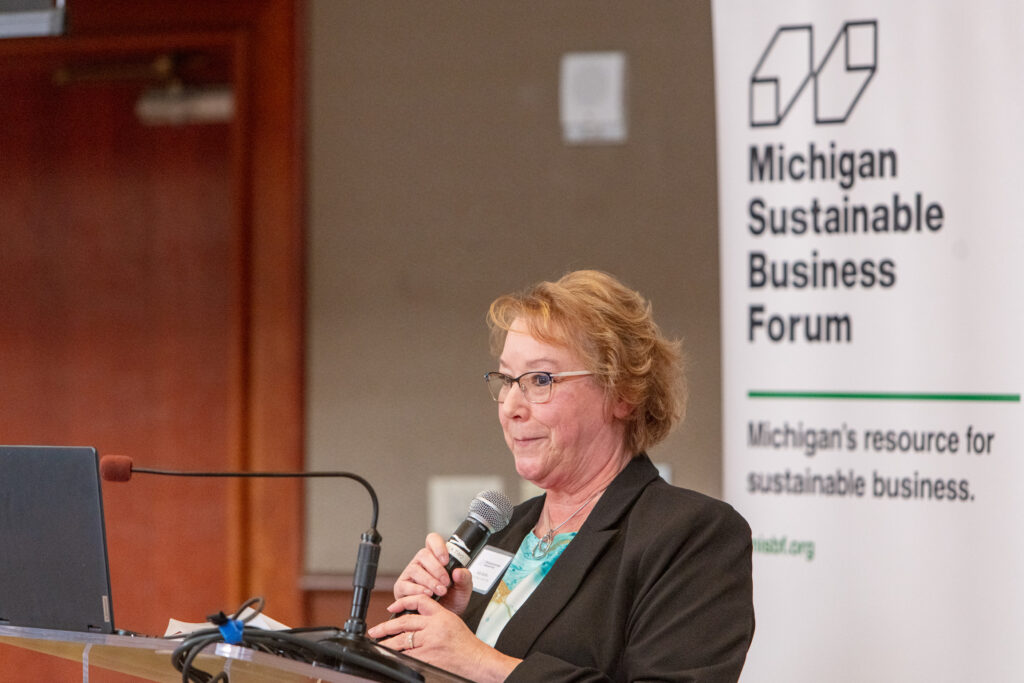
Kniffen introduced the sustainability initiatives of the tribe, which operates the casino and is one of the largest commercial and community stakeholders in the region. Her talk focused on construction and demolition waste management during planned and emergency situations, community advocacy, and food waste diversion.
- The tribe currently sends food waste to local composter Dairy Doo or the City of Mt. Pleasant’s anaerobic digester at the Water Resource Recovery Facility.
- It works with elementary schools to teach students the importance of recycling, and sets up share tables. It also works with students from Central Michigan University.
- In the near future, it will be piloting table-top compost appliances at Andahwad, the Tribe’s assisted living facility.
Pollution Prevention and Industry Leadership Key to Materials Management Success
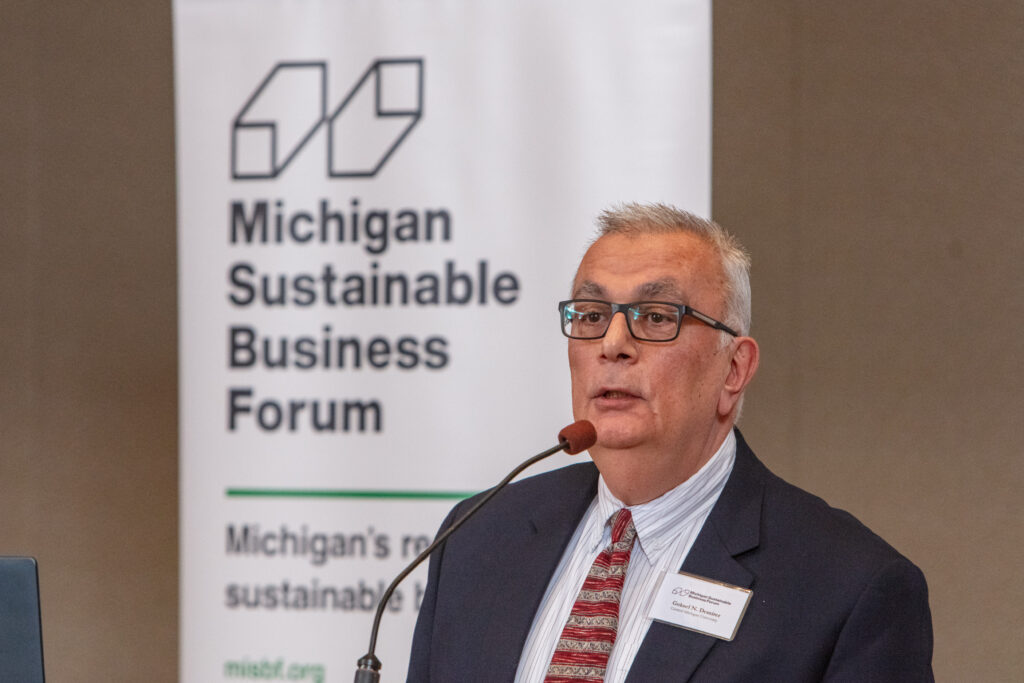
Dr. Goksel Demirer, a professor for Central Michigan University’s School of Engineering and Technology, and Daniel Macaulay, Senior Sustainability Specialist for Primo Brands, described the state of waste management in local industry.
“It’s like a coin with two sides. There is one side with environmental conscientiousness, the other that is resource focused. They are both important,” said Demirer, describing both the environmental and economic benefits to industrial pollution prevention. “Pollution prevention increases quality, quantity, and value for the company, but it also benefits the community.”
Macaulay echoed the collaboration sentiment by stating that their sustainability efforts and plastic management in both pre- and post-consumer markets are made possible by industry and community partnerships.
Kick-off to Materials Management Planning Engagement in Central Michigan
The theme of the forum was “How Central Michigan Can Develop Recycling Infrastructure, Reduce Food Waste and Promote Local Prosperity Through Sustainable Materials Management.” It also featured a presentation from MiSBF Executive Director Daniel Schoonmaker on the economic opportunities available through materials management and pollution prevention, and an introduction to food waste in the state.
EGLE Materials Management Planning Specialist Christina Miller and newly appointed Isabella County Materials Recovery Facility Director Charity Sweet, the lead for the planning process, provided an introduction to the the Heartland Materials Management Planning Committee, an intercounty planning unit that stretches across eight counties (Gratiot, Isabella, Clare, Gladwin, Mecosta, Ogemaw, Osceola, and Midland) and is the largest materials management planning work group in the state.
All counties in Michigan are currently updating their former solid waste management plans, previously focused on increasing landfill capacity, into new and improved materials management plans, now focused on maintaining capacity through landfill diversion. While many counties across the state are working independently, Miller explained that independence does not disinclude interlocal collaboration. Sweet described Heartland’s planning committee as “one region, one plan, shared future.”