How Frederik Meijer Gardens & Sculpture Park Demonstrates Leadership in Stormwater Management Through Natural Infiltration and Green Infrastructure, Protecting Two West Michigan Watersheds
March 13, 2020
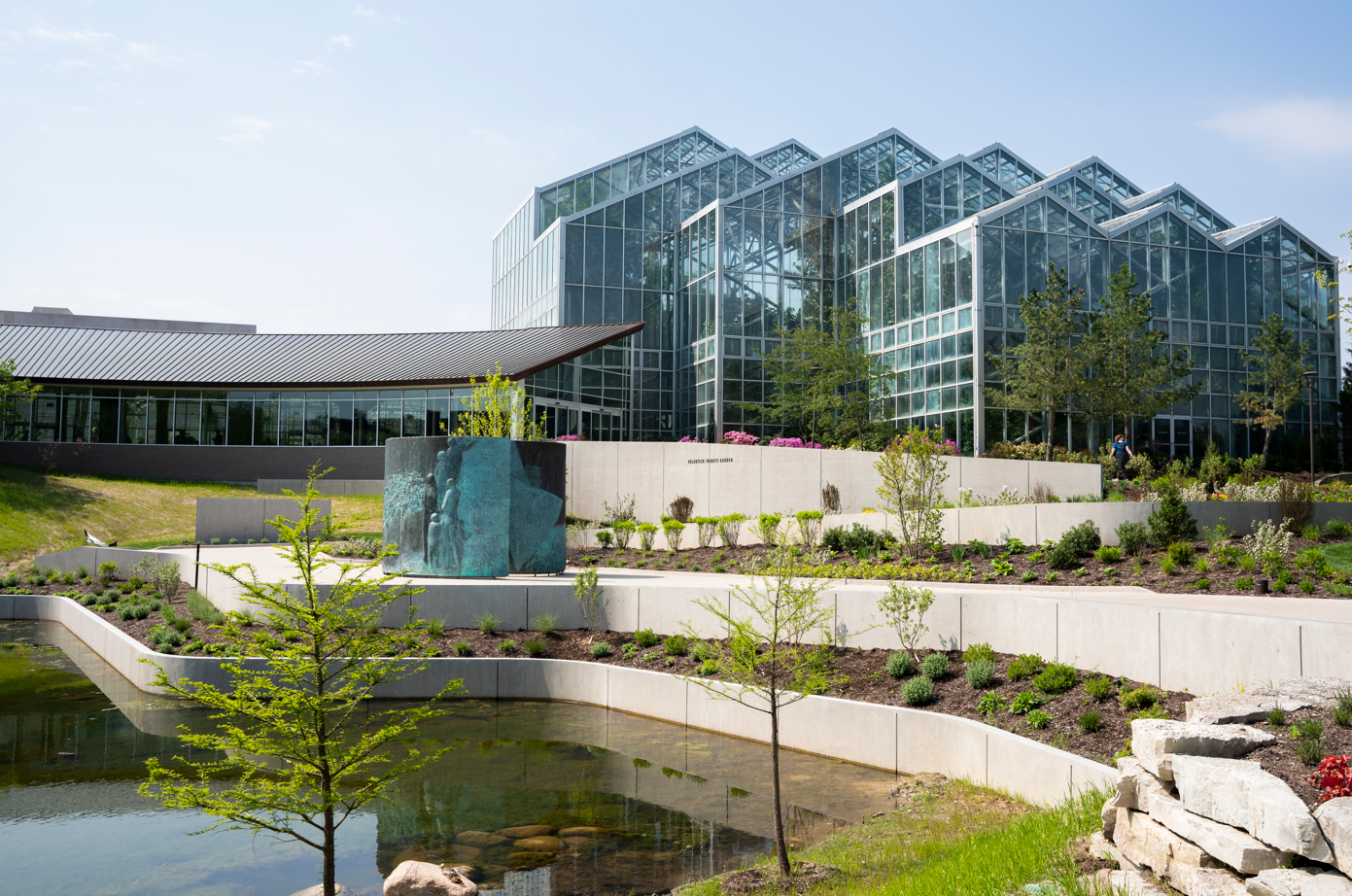
Since opening its doors in 1995, Frederik Meijer Gardens & Sculpture Park has welcomed more than 12 million visitors to its 158-acre campus dedicated to horticulture, sculpture, and the natural environment. One of the most visited cultural attractions in the region, the Gardens is uniquely positioned on the boundary of two watersheds: the Coldbrook Creek watershed at its entrance and the Plaster Creek watershed throughout the remainder of the property.
From its earliest development, Frederik Meijer Gardens has relied primarily on natural stormwater management, allowing the landscape itself to filter, absorb, and slow runoff. Built on pristine land with remnants of orchards and forests still visible today, the Gardens infiltrate nearly all stormwater on site, demonstrating how nature-based solutions can protect wetlands, waterways, and ecosystems while supporting a world-class visitor experience.
Green infrastructure at Meijer Gardens is seamlessly integrated into daily operations, offering environmental benefits that are largely invisible to guests, but critical to the health of the surrounding watersheds.
Letting the Landscape Do the Work
Unlike many large attractions, Frederik Meijer Gardens was developed with minimal engineered stormwater infrastructure. With the exception of one small parking lot at the front of the property, all stormwater runoff is infiltrated on site using natural systems.
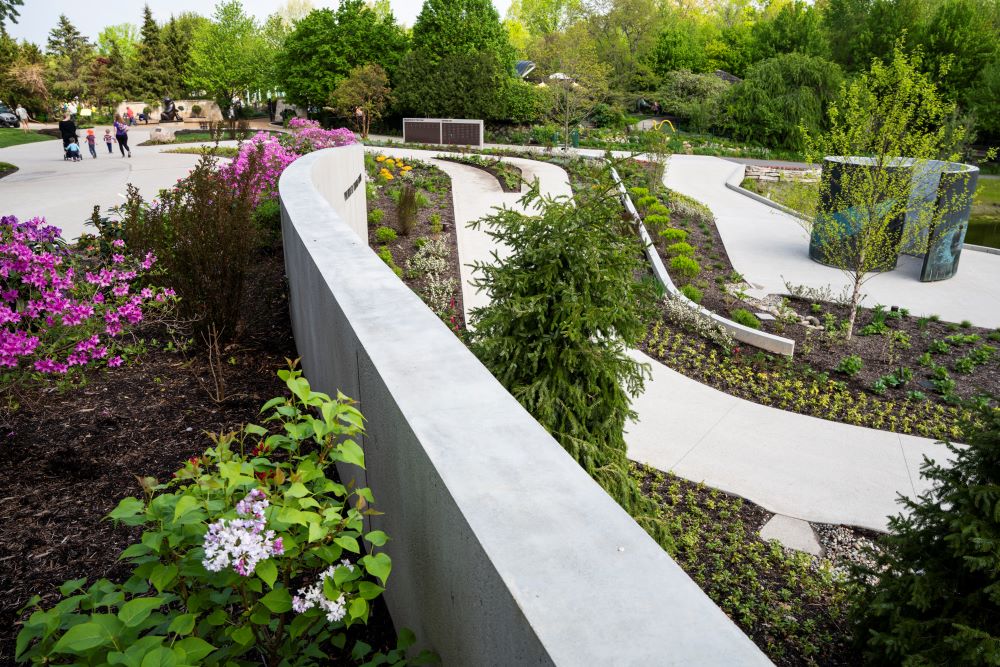
Engineered landscape depressions and rain gardens capture runoff from parking areas and slow infiltration, allowing water to filter through soil and vegetation before reentering the ground. Trees and native plantings throughout parking lots act as buffers, reducing runoff while also providing shade and cooling during hot summer months.
Stormwater that flows beyond rain gardens is directed to a series of ponds that act as holding tanks, particularly important during the first rainfall after dry periods when pollutants are most concentrated. These ponds provide both water quality protection and operational efficiency.
The Heckman Family Pond supplies 100 percent of the irrigation water used throughout the Gardens. A sophisticated “just-enough watering” irrigation system is guided by an on-site weather station that estimates daily evaporation. Using this data, irrigation run times are calculated for each zone, ensuring plants receive only the water they need.
As stormwater moves through the Gardens, it is filtered repeatedly by diverse plant material before being absorbed back into the soil or released into the atmosphere, completing a restorative natural cycle.
Habitat Restoration and Long-Term Stewardship
Beyond public spaces, Frederik Meijer Gardens maintains 200 acres of undeveloped land in a natural state until future use is determined. These areas undergo active ecological management, including invasive species removal through controlled burns, targeted injections, and manual removal. Native habitats have been restored to support wildlife, and the Gardens intentionally avoids introducing invasive species, such as refraining from stocking koi in the Japanese pond to protect nearby streams.
Green infrastructure at FMG offers another advantage: low maintenance costs. Cleaning and upkeep for catch basins and retention ponds are minimal and comparable to conventional systems, reinforcing the long-term value of nature-based solutions.
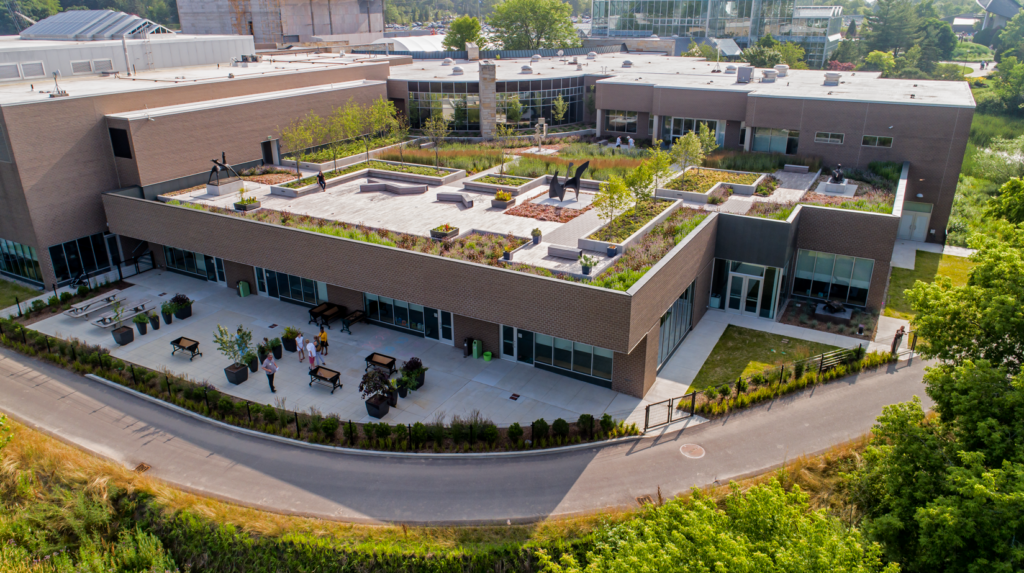
As part of a $115 million capital campaign, Frederik Meijer Gardens is expanding its campus with sustainability at the forefront. A newly completed 22,000-square-foot rooftop garden features trees and shrubs that provide intensive stormwater control while moderating temperature fluctuations in the Covenant Learning Center below. The rooftop garden also creates valuable habitat for birds, butterflies, and insects.
Additional project highlights include a new 60,000-square-foot LEED-certified Welcome Center, a 20,000-square-foot LEED-certified Covenant Learning Center, and expanded accessible parking enhanced with urban gardens, ensuring environmental stewardship continues alongside growth.
About Frederik Meijer Gardens & Sculpture Park
Frederik Meijer Gardens & Sculpture Park is a 501(c)(3) nonprofit organization dedicated to promoting the enjoyment, understanding, and appreciation of gardens, sculpture, the natural environment, and the arts. Its 158-acre campus includes Michigan’s largest tropical conservatory, five indoor gardens, outdoor gardens, nature trails, sculpture galleries, educational spaces, and event facilities.
About Green Stormwater Infrastructure
Green stormwater infrastructure (GSI) uses natural systems such as rain gardens, permeable pavement, green roofs, and cisterns to manage stormwater on site. These practices reduce flooding, improve water quality, and restore ecological function while supporting urban development.