
How Hispanic Center Rainscaping Enhancements Fuel Further Sustainable Thinking Property-Wide
March 12, 2022
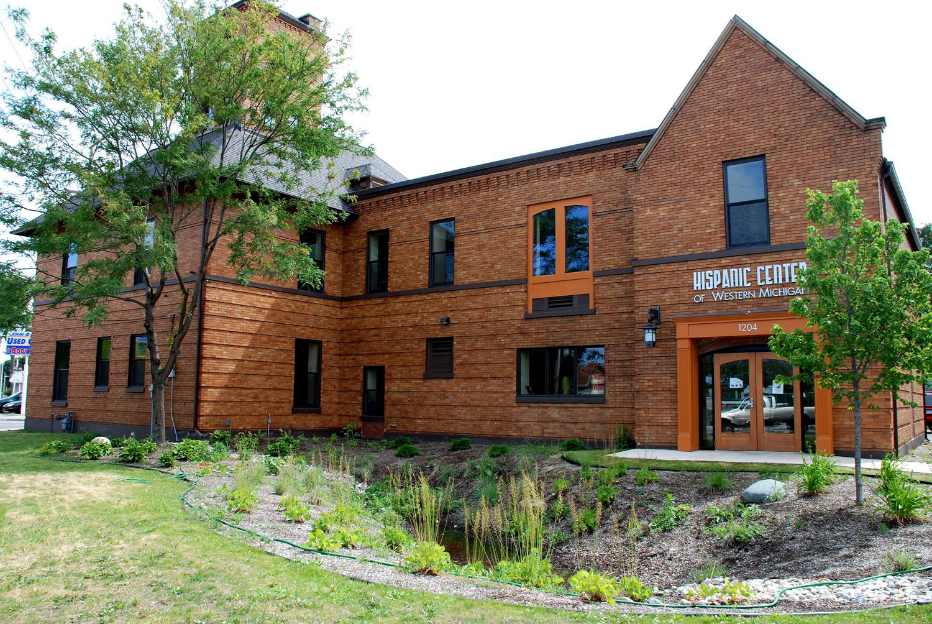
The Hispanic Center of Western Michigan, located in the Grand Rapids community of Roosevelt Park, exists to deliver unmet social services to the Greater West Michigan Hispanic community.
Several years ago, The Hispanic Center’s headquarters underwent a significant redesign to reduce stormwater runoff from its property. Working with the sustainability-focused Grand Rapids architects Bazzani Associates, the property’s numerous impervious surfaces were replaced with a network of rain gardens to capture and dilute stormwater runoff from the center’s building and parking lot. The property is now among the few zero stormwater discharge sites in the region.
An Ongoing Education
Since the initial redesign, The Hispanic Center has sought to both maintain and enhance the overall site to address such issues as invasive plants, while also introducing more sustainable practices within the organization.
“We have been continually educating ourselves about rainscaping and how we can further improve our practices there,” explains Language Services & Workforce Development Manager Holly Rea-Clarkson. “We’ve learned a lot working with LGROW (the Lower Grand River Organization of Watersheds), which has been extremely helpful.”
Rainscaping and other green stormwater infrastructure promote watershed restoration by managing stormwater as closely as possible to where it falls to ensure a healthy water flow. Landscapers and contractors skilled in rainscaping techniques can help homeowners and businesses customize their properties to meet budgets and specific environments.
MiSBF introduced The Hispanic Center to LGROW in 2019. Following the property’s redesign, LGROW conducted a site visit led by Environmental Programs Associate Senci Monasterski where they assessed the rain gardens and offered recommendations. These included the addition of specific native plants to other upgrades the center could pursue on its own schedule. Some initial steps included adding native flowers and shrubs to the rain gardens.
“Senci and her team were quite knowledgeable and easy to work with,” Rea-Clarkson says. “They understood the budget constraints non-profits face, and their information sessions were helpful, including their advice on receiving assistance from Kent County.”
COVID’s Reach Extends to Property Use
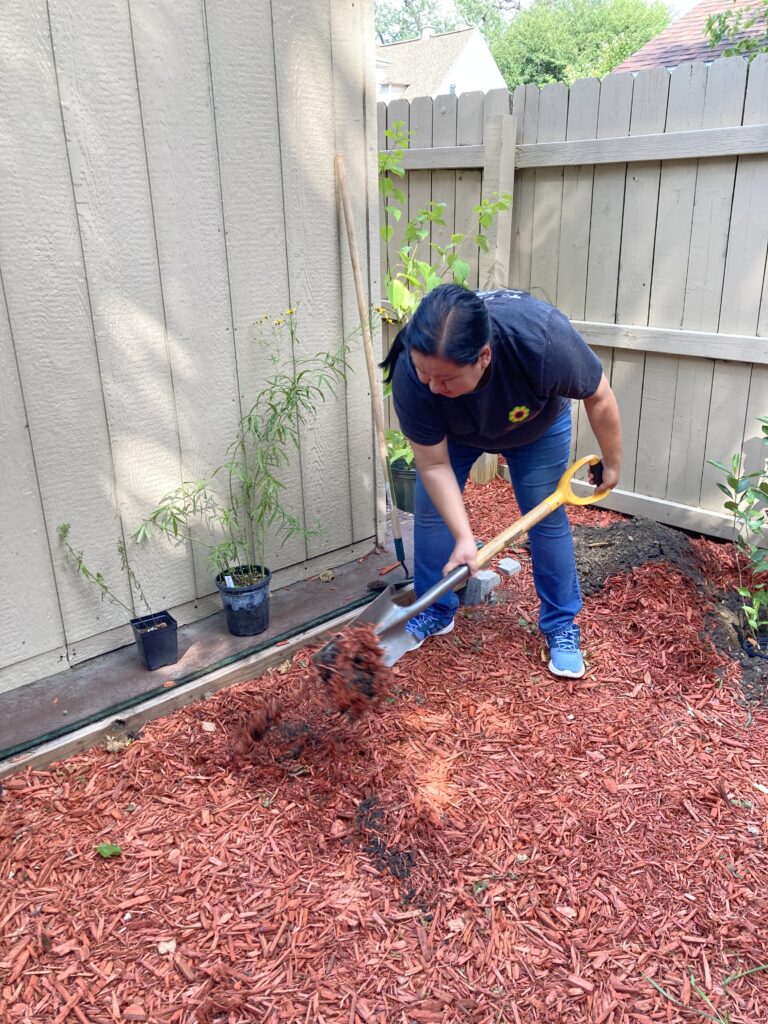
Timely events also influenced the use of the Hispanic Center grounds. The onset of the COVID-19 pandemic prompted the center to initiate a food distribution program, which created a need for storage space not available within the building. Fortunately, an underutilized portion of the property prone to turning muddy during rainy periods provided room for a storage shed, 15 more plants with mulch, a composting area, and a green space for staff and visitors to enjoy.
As The Hispanic Center continues to grow and evolve in service to its community, the sustainable thinking that began with its rainscaping project will likewise play a part in its mission. Led by its own six-person Green Team, the center can look to the resources of the greater West Michigan sustainability community to advance its knowledge and execution of green practices.
About the Hispanic Center of West Michigan
The Hispanic Center of West Michigan is a community-based nonprofit organization dedicated to providing essential social services, workforce development, education, and advocacy for the Greater West Michigan Hispanic community.
About Green Stormwater Infrastructure
Green stormwater infrastructure (GSI) uses natural systems such as rain gardens, permeable pavement, green roofs, and cisterns to manage stormwater on site. These practices reduce flooding, improve water quality, and restore ecological function while supporting urban development.