
How John Ball Zoo Uses Green Stormwater Infrastructure to Protect Water Resources and Enhance Animal Habitat
March 12, 2018
Located on 110 acres in Grand Rapids’ west side, John Ball Zoo attracts more than 520,000 visitors each year and drains directly to the Grand River. With a long-standing commitment to conservation and environmental education, the Zoo has invested heavily in protecting water resources in West Michigan through innovative stormwater management and water efficiency strategies.
Building on decades of leadership, John Ball Zoo recently completed a twelve-month performance monitoring period and third-party audit to meet stormwater management qualifications and is now pursuing Petal Certification through the Living Building Challenge, making it one of only a small number of local properties to do so. These efforts reflect the Zoo’s integrated approach to sustainability, animal care, and community stewardship.
Leveraging Stormwater Management for Habitat and Animal Care
John Ball Zoo’s stormwater journey began in the 1990s alongside major investments in City of Grand Rapids water infrastructure. As awareness of water conservation grew, Zoo leadership began tracking water use across facilities. In 2002, operations required an estimated 89 million gallons of water annually, a figure that spurred immediate action. Through efficiency improvements and guest education emphasizing the importance of clean water for wildlife, the Zoo reduced its water consumption by more than 70 million gallons.
These early successes led to a deeper focus on stormwater mitigation. The Zoo’s 127 year-old campus is built into a hillside with elevation changes of up to 108 feet. While one-third of the property remains undeveloped to limit impervious surfaces, underground springs, poor soil quality, and heavy water volumes present ongoing challenges for infiltration and runoff control.
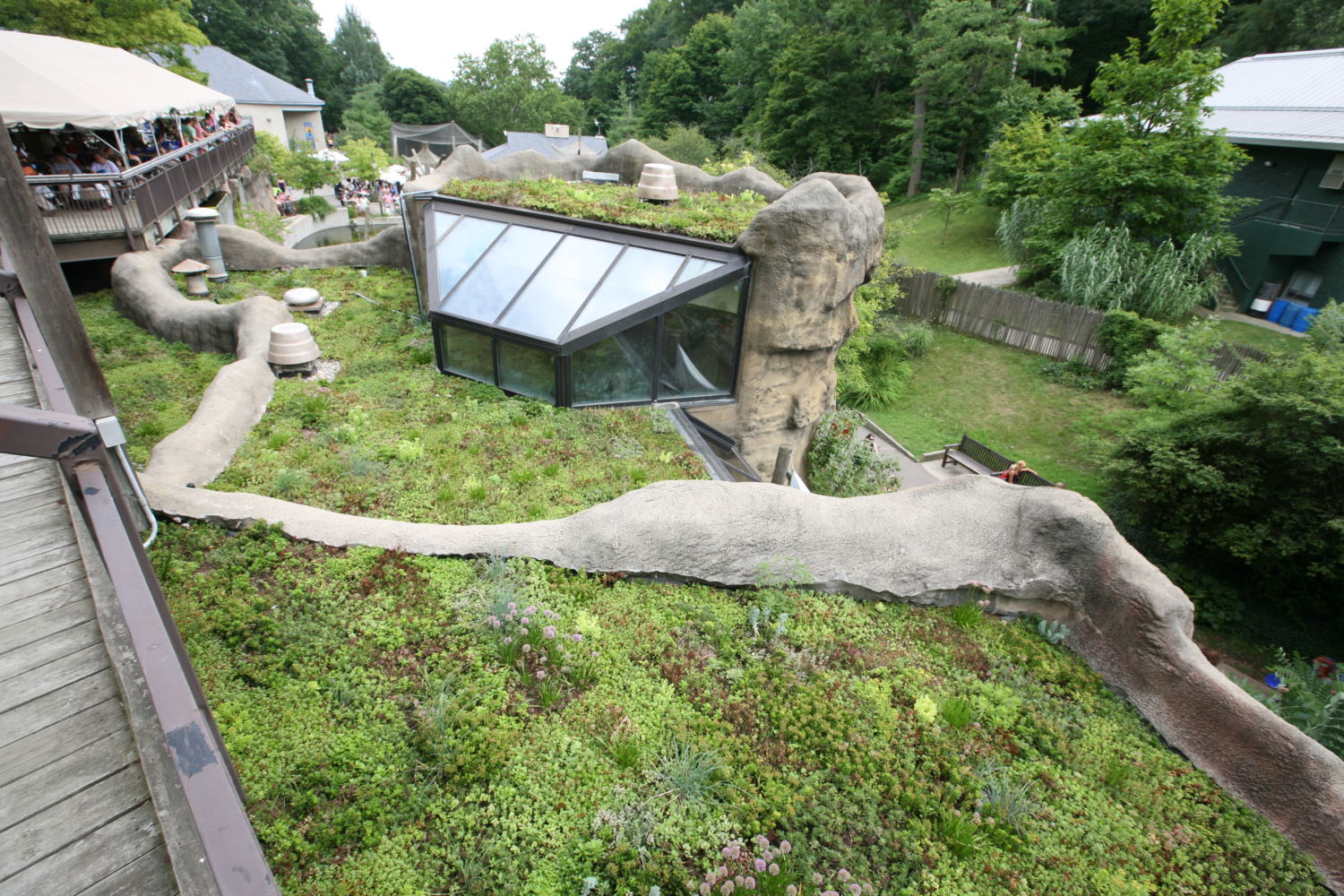
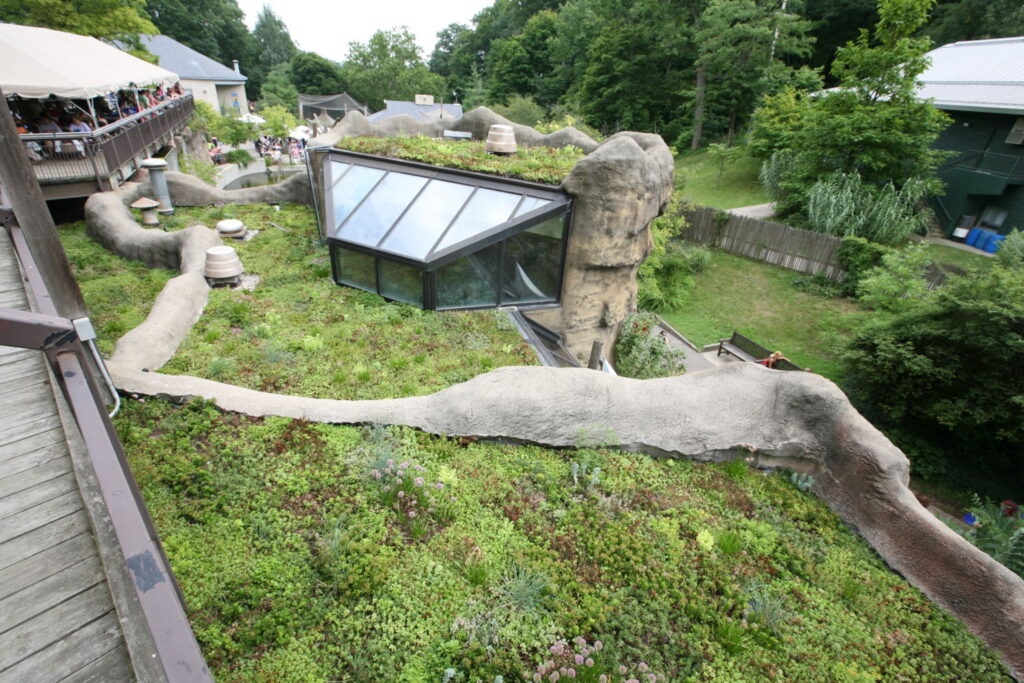
In 2008, John Ball Zoo installed its first green roof on an animal exhibit, allowing stormwater to infiltrate where it falls while providing cooling benefits for animal habitats and visual appeal for guests. Since then, four additional green roofs, installed largely by Zoo staff, have been added using a mix of native and non-native plant species, with plans for future expansion. These systems are expected to perform comparably to conventional roofs while delivering added environmental and animal welfare benefits.
Complementing the green roofs, the Zoo has installed vertical garden walls, including one measuring 12 feet tall and 80 feet wide. These structures introduce vegetation into nontraditional spaces, reduce airborne contaminants, moderate temperatures, and further support stormwater management.
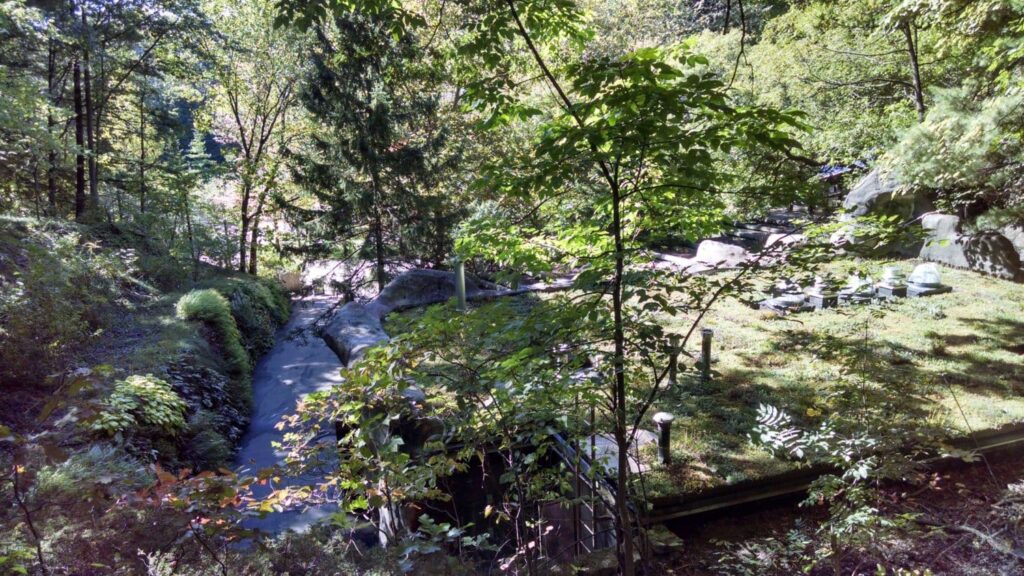
Stormwater infrastructure has also been integrated into new development. The Forest Realm expansion was designed to capture the “first flush” of stormwater using leaching basins and permeable walkways constructed with wood ash fines. Looking ahead, the Zoo plans to install stormwater separators to improve runoff quality before water reaches a pond near the front gate, potentially allowing that water to be reused for irrigation and animal care.
Despite site constraints, the benefits of green stormwater infrastructure have consistently outweighed the costs. These nature-based solutions provide value to guests, improve habitat conditions for animals, and protect downstream water quality in the Grand River watershed. As the Zoo grows, future plans include permeable parking surfaces, vegetated strips, and continued reductions in overall water use.
About John Ball Zoo
John Ball Zoo is a 501(c)(3) nonprofit founded in 1891 and located in Grand Rapids, Michigan. Accredited by the Association of Zoos and Aquariums, the Zoo is home to more than 200 species and serves over 520,000 visitors annually. Its mission is guided by the core values of Conservation, Education, Community, and Celebration.
About Green Stormwater Infrastructure
Green stormwater infrastructure (GSI) uses natural systems, such as green roofs, permeable surfaces, and infiltration basins to manage runoff, improve water quality, and provide ecological benefits. MiSBF supports these practices for their ability to protect waterways, enhance resilience, and deliver community value.