How Grand Rapids Demonstrates Leadership in Green Stormwater Infrastructure Through Public Transportation
March 12, 2019
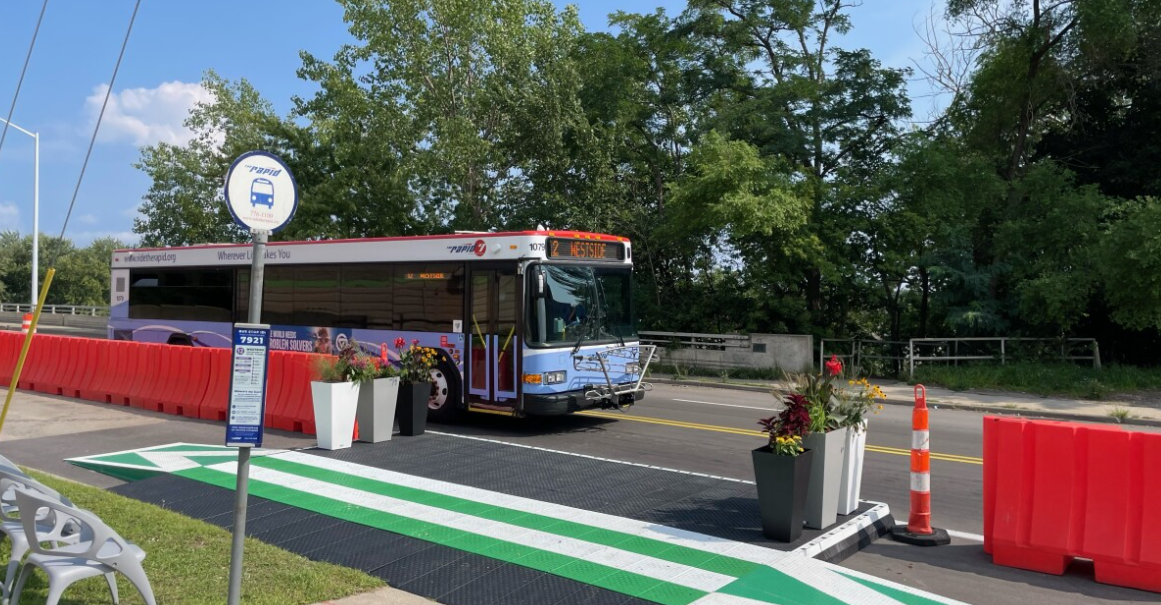
Serving six cities and providing an estimated 10.5 million rides annually, The Rapid plays a vital role in West Michigan’s mobility and economic vitality. Sustainability aligns closely with the organization’s core values, guiding decisions not only in service provision but also in how its facilities are designed and operated.
Between 2002 and 2014, an aging warehouse was transformed into the redesigned Rapid Central Station in downtown Grand Rapids. The facility became the first LEED-certified transit building in the nation, incorporating green stormwater infrastructure to manage runoff from its 130,000-square-foot footprint.
Because stormwater from the site drains directly into the Grand River, The Rapid saw green infrastructure as more than a path to certification. It was instead an opportunity to protect one of the region’s most critical natural resources while setting a national example for sustainable transit facilities.
Green Roofs and Onsite Stormwater Management
To reduce stormwater runoff volumes and meet LEED requirements, The Rapid installed a 15,000-square-foot fully vegetated green roof at its Central Station. Designed to increase infiltration, reduce urban heat stress, and extend roof durability, the system reflects a long-term investment in performance rather than short-term solutions.
Working with LiveRoof experts, The Rapid selected plant species capable of withstanding Michigan’s climate. The roof’s modular design allows damaged sections to be removed and repaired efficiently. On average, the green roof absorbs approximately 10 percent of rainfall that falls on it.
Stormwater that flows beyond the roof is directed to a canopy platform that further slows runoff before entering catch basins equipped with two swirl separators, which remove debris and improve water quality prior to discharge. After more than 12 Michigan winters, the system continues to function at full capacity.

Benefits for Employees, Riders, and the Community
The Rapid’s green stormwater infrastructure delivers benefits well beyond runoff reduction. More than 400 employees have access to the walkable green roof during breaks, supporting health, wellness, and connection to nature in an urban environment. Staff members are encouraged to participate in The Rapid’s Green Team, reinforcing a culture of sustainability across the organization.
Green infrastructure also extends into the transit system itself. Along the Silver Line and at select bus stops throughout the city, bioswales and small rain gardens help infiltrate stormwater along walkways and boarding areas, improving conditions for riders while enhancing streetscape aesthetics.
Some of these larger infrastructure projects have been partially supported by federal and state transportation grants, helping offset upfront costs. While features such as green roofs may carry higher initial expenses than conventional systems, The Rapid views the long-term environmental, social, and operational benefits as outweighing those costs.
As technologies evolve, The Rapid is exploring future opportunities such as porous pavement capable of supporting heavy bus traffic. Decision-makers recognize that every project and budget is unique, but continue to see value in investigating innovative green stormwater solutions.
The organization also acknowledges the importance of collaboration. City departments, employees, and riders all play a role in keeping storm drains clear, especially during winter months, to prevent flooding at bus stops and along routes. Through facility design, streetscape improvements, and public transportation services, The Rapid contributes to environmental stewardship while advancing regional sustainability goals.
About the Rapid
The Rapid is a regional public transportation provider serving six cities in West Michigan. Its mission is to create, offer, and continuously improve a flexible network of transportation options and mobility solutions. The Rapid envisions public transportation as a driver of sustainability and economic development, built on collaboration and a commitment to customers, employees, and community leadership.
About Green Stormwater Infrastructure
Green stormwater infrastructure (GSI) manages rainfall where it falls using nature-based solutions such as green roofs, bioswales, and rain gardens. These practices reduce runoff, improve water quality, mitigate urban heat, and provide social and ecological benefits. MiSBF supports green stormwater infrastructure as a key strategy for watershed protection and climate resilience.