Safe & Sustainable Foodware: Closing the Loop with Certified Compostables
March 31, 2026
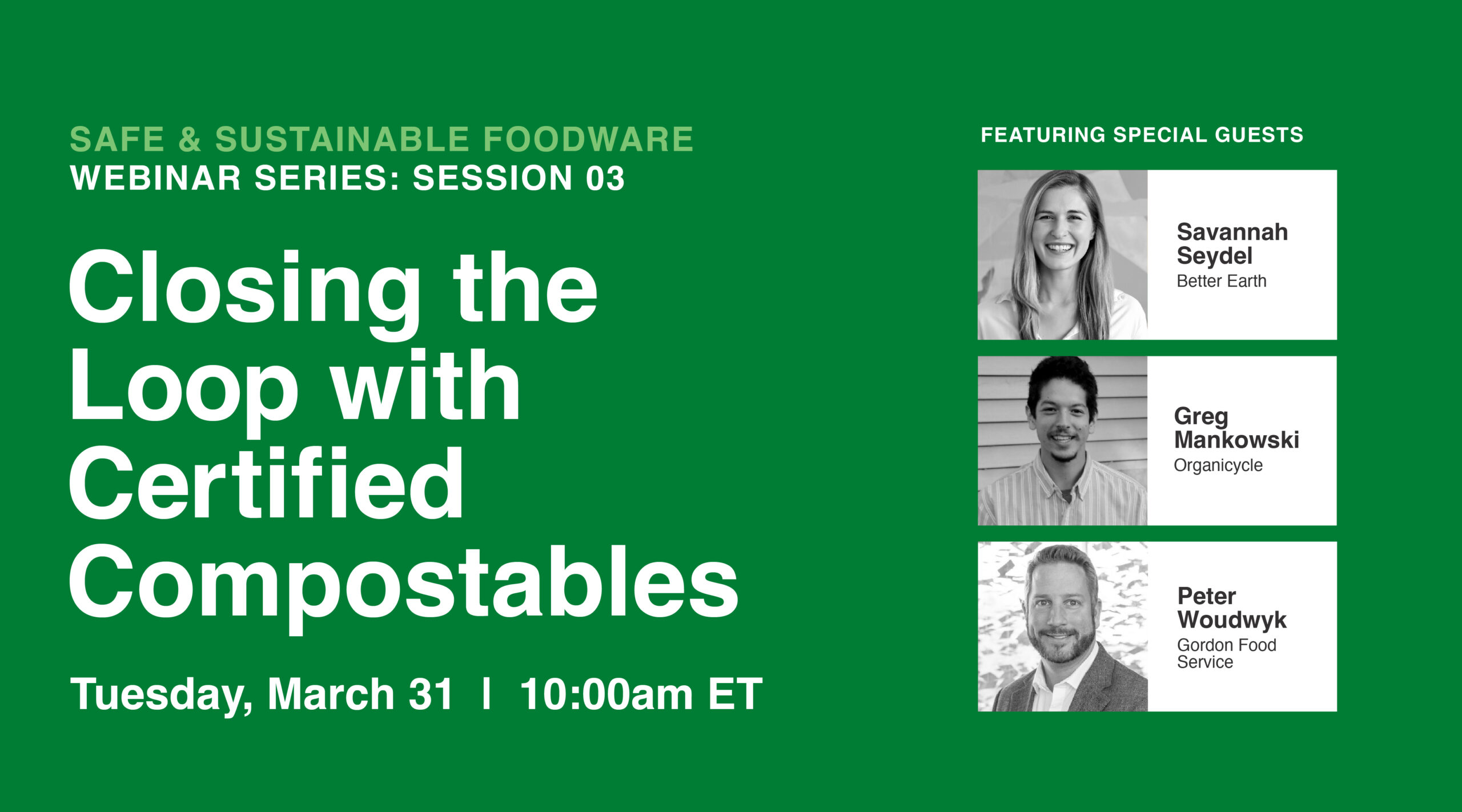
Él Recipientes para alimentos seguros y sostenibles webinar series equips restaurants, institutional food service providers, business associations, and community partners with the knowledge, tools, and resources to adopt reusable or certified-compostable food service products.
Each session explores a critical piece of the solution, from understanding health and environmental risks, to navigating product certifications, to engaging staff and patrons in sustainable practices. Participants will hear from early adopters, industry experts, and peer institutions, gaining practical strategies for overcoming challenges and advancing safer, certified-compostable, and reusable alternatives.
This session highlights how certified compostable packaging can help reduce waste, prevent pollution, and support a circular economy in the food service sector.
La serie está financiada por las Subvenciones para la Prevención de la Contaminación del año fiscal 23-24 de la Agencia de Protección Ambiental de los Estados Unidos (EPA): Justicia Ambiental a través de Productos más Seguros y Sostenibles, a través del Instituto de Ciencias y Políticas Ambientales (IESP) de la Universidad de Illinois en Chicago. Es posible que los trabajos de los beneficiarios de las subvenciones no hayan sido revisados formalmente por la EPA y no reflejen sus opiniones y políticas. La EPA no avala las marcas comerciales ni recomienda el uso de los productos comerciales mencionados en estos documentos.
Objetivos de aprendizaje:
- Explain product certifications and how they relate to foodware.
- How to identify safe compostable foodware alternatives.
- Determine what to look for when sourcing compostable foodware.
Altavoces:
- Savannah Seydel, VP of Sustainability, Better Earth LLC
- Greg Mankowski, maestro compostador, Organiccycle
- Peter Woudwyk, Category Specialist – North American Packaging & Serviceware Disposables, Gordon Food Service
Key Themes
This session of the Safe & Sustainable Foodware webinar series focused on the role of certified compostable packaging within a circular economy. Speakers highlighted the growing environmental challenges associated with conventional plastic packaging including overproduction, limited end of life infrastructure, and landfill impacts. While compostable alternatives offer solutions without petrochemicals, marketing and a lack of widespread proper infrastructure remain significant barriers. The webinar emphasizes the importance of third-party certifications, the need for alignment with composting systems, and creation of reuse systems.
- Certified-compostable products are critical for verifying compostability standards, ensuring the product is PFAS-free, and building trust with customers.
- Rapid growth of plastic use heavily relies on non-renewable, petroleum-based materials.
- Composting infrastructure is growing but requires increased expansion.
- Reuse programs in food businesses reduce waste significantly, provide safe alternatives to traditional disposable products, and lower the bottom line of companies.
Why Certified Compostables Matter
Savannah Seydel, Vice President of Sustainability at Better Earth LLC described the overwhelming amount of single-use plastics being produced, consumed, and disposed of in landfills. Concurrently, market demand for sustainable alternatives has resulted in production of products that make unverified or misleading claims. Seydel explained that certification is the most reliable way to distinguish truly sustainable products from “greenwashing.”
- Third-party standards from organizations such as the Biodegradable Products Institute (BPI) ensure that compostable products meet strict criteria for breakdown, toxicity, and labeling.
- Certified compostables must decompose in commercial composting environments within a defined timeframe and leave behind no harmful residues.
- BPI certified products do not contain PFAS and other intentionally added fluorinated compounds.
From Sourcing to End-of-Life: A Systems Approach
As a Category Specialist for Gordon Food Service, Peter Woudwyk provided insight into how food business decisionmakers are navigating the transition to sustainable packaging. He highlighted the importance of aligning product selection with real-world conditions such as heat tolerance, supply chain reliability, and access to composting resources. He also stressed the importance of clear labeling for helping end users understand whether products should be composted, recycled, or reused.
- Certified compostables are not a standalone solution, but a key component of a broader circular strategy that also includes reuse and recycling.
- While cost remains a consideration, compostable products are increasingly approaching price parity with conventional alternatives in many categories.
- Policy changes and market growth are expected to further narrow the gap over time.
End Life of Products and Beyond
As communities expand composting infrastructure and manufacturers continue to innovate, certified compostable foodware is positioned to play an increasingly important role in building safe, more sustainable food service systems.
Master Composter Greg Mankowski has a decade of experience in industrial composting. Under the right conditions, certified compostables break down efficiently, often within days during active composting phases.
- They do not leave visible residues or contaminants in finished compost when properly processed.
- Greenwashed items marketed as “biodegradable” or simply colored green can disrupt composting operations and degrade the quality of the final product.
Circular Economy Solutions
Las prácticas de economía circular industrial se centran en mantener los materiales en uso, desarrollar mercados finales locales y reducir la dependencia de los vertederos. MiSBF promueve estas prácticas porque reducen el impacto ambiental, fortalecen las cadenas de suministro regionales y ayudan a las empresas a alcanzar sus objetivos de sostenibilidad sin perder competitividad.
Obtenga más información sobre las soluciones de economía circular aquí