Forum: Great Lakes and Rivers as a Business Driver
August 21, 2026
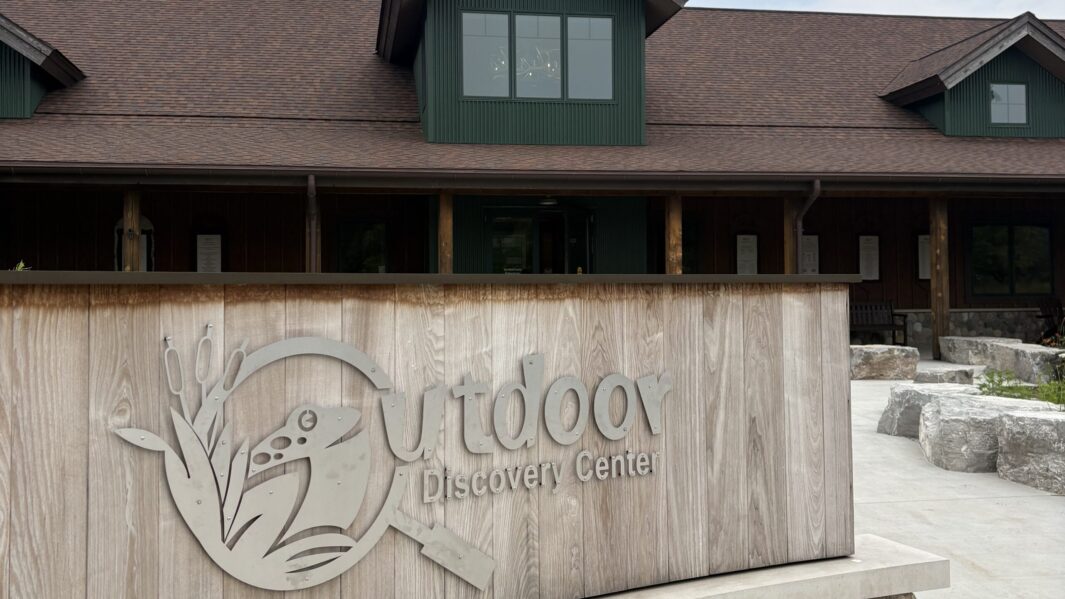
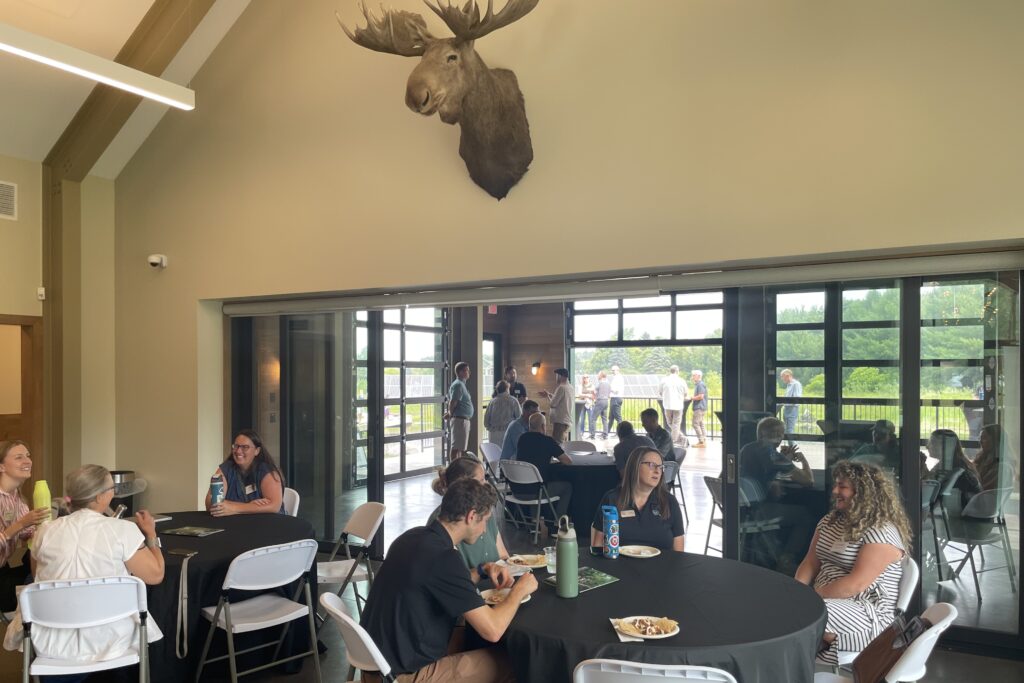
Michigan Sustainable Business Forum and ODC Network hosted a forum last month to celebrate public and private investments in Great Lakes restoration and water conservation, including the 13-year anniversary of Project Clarity and more recent investments and recourse from local companies and institutions.
Business leaders, sustainability professionals, and community stakeholders gathered at the Outdoor Discovery Center for Michigan Sustainable Business Forum’s Great Lakes as a Business Driver forum, exploring how investments in water conservation are strengthening both the regional economy and the health of the Lake Macatawa Watershed.
The Great Lakes and West Michigan’s local watersheds are a key economic driver and an important consideration of corporate and community sustainability plans in the region. Conservation is becoming a business imperative. Forum Executive Director Daniel Schoonmaker noted that the event highlights the Forum’s growing involvement in Great Lakes restoration through the Healing Our Waters Coalition, and that the U.S. House recently approved a bipartisan increase in funding for the Great Lakes Restoration Initiative which has supported more than 8,850 projects, including the Greenway’s most recent project. It was also noted that for every dollar invested in the Great Lakes, the economic return is more than 3-to-1.
Project Clarity’s Next Phase
ODC Network CEO Travis Williams shared the story of Project Clarity, which launched in 2014 to address sediment, nutrient, and bacterial pollution through the 175 square mile Macatawa Watershed that includes Lake Macatawa, the Macatawa River, and nearly 700 miles of rivers, streams, and ditches. Affiliated ODC Network initiatives include the Macatawa Greenway, which has permanently protected lands from Zeeland Township to Lake Michigan for wildlife habitat and recreation, and a large portfolio of private sector sites advancing “watersmart” landscaping and conservation.
“The Great Lakes are the bathtub that everything drains into,” Williams said, emphasizing the importance of upstream conservation efforts, “[and] Lake Macatawa was turning green, the type of green where you could write your name on the top of the water.”
He reflected on ODC Network’s growth over the past 26 years into a regional conservation organization serving more than 1.5 million program participants, operating five nature-based early childhood sites, partnering with more than 35 schools, and protecting thousands of acres of natural land while maintaining free public access to trails and preserves.
Williams described the ecological challenges facing the watershed, where approximately 90 percent of historic wetlands and forests have been lost and half of the watershed remains in agricultural production. Before restoration efforts began, nutrient pollution had turned Lake Macatawa into a lake frequently plagued by severe algal blooms.
Project Clarity has produced measurable improvements over the past decade, including:
- Preventing approximately 46,000 tons of sediment from entering Lake Macatawa annually.
- Keeping more than 40,000 pounds of phosphorus out of the lake each year.
- Reducing lake phosphorus concentrations by roughly 60 percent over ten years.
- Protecting 290 acres of critical land.
- Stabilizing three miles of streams.
- Helping 65 farms implement conservation practices across 36,000 acres.
- Educating more than 10,000 community members.
Williams introduced Project Clarity Phase III, which focuses on five interconnected priorities: establishing sustainable long-term funding, implementing in-lake phosphorus treatment to address legacy pollution, expanding agricultural best management practices, continuing public education, and strengthening long-term monitoring. This will all be made possible through public-private partnerships, as he underscored that “if our economy isn’t thriving, we aren’t thriving.”
Conservation Helps Delay Costly Infrastructure
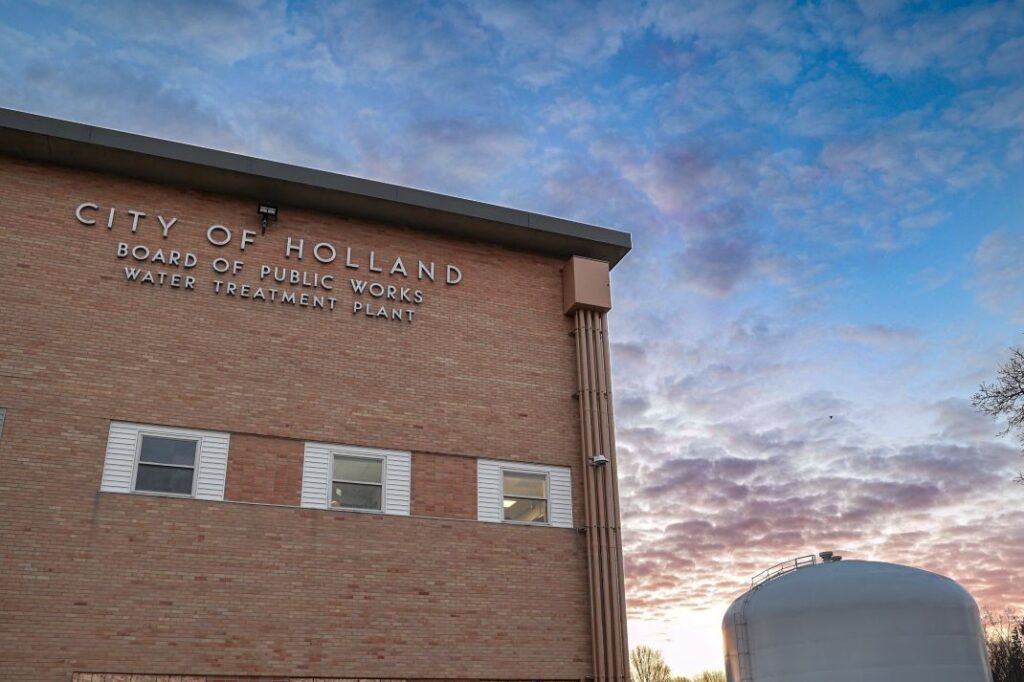
Andrew Reynolds, Efficiency Programs Manager for Holland Board of Public Works, provided a historical look at Holland’s water system and demonstrated how conservation has become an essential infrastructure strategy.
Tracing decades of rapid community growth, Reynolds explained how the city’s water treatment plant has expanded multiple times since the 1950s to meet increasing demand from residents and industry. Today, however, utilities are increasingly asking where additional expansion is necessary or whether smarted water management can postpone costly capital investments.
“My team at the BPW exists because we want to delay the expansions,” Reynolds explained during the panel discussion. “It is cheaper for customers to reduce [water use] than it is to finance new developments.”
Reynolds emphasized that water conservation is not just about managing scarcity but also about creating operational and financial benefits for utilities, businesses, and customers across the region. The same cost-saving measures that consumers can employ in turn save them money in taxes as further plant expansion is indefinitely postponed through responsible resource management practices.
Nature-Base Solutions Deliver Business Value
Prompted in part by sustainability goals established by new parent company Hitachi, JR Automation analyzed its water use and identified landscape irrigation as one of its largest opportunities for improvement.
Joel Cooper, Global Director of Sustainability, Environmental Health 7 Safety, and Facilities at JR Automation, demonstrated how conservation initiatives can create measurable business value.
Initial efficiency upgrades reduced irrigation demand significantly, while a more comprehensive redesign delivered even greater savings. After irrigation infrastructure failed, the company replaced traditional turf grass landscaping with native prairie, dramatically reducing water consumption, lowering operational costs by approximately 70 percent, and creating visual wealth for staff and clients.
“The most impactful intervention we could do was also the best nature-based model,” Cooper said, describing JR Automation’s rationale behind implementing sustainable infrastructure, “starting fresh was a more efficient option than retro-fitting.”
He also highlighted the company’s newly constructed Zeeland headquarters, where ODC Network helped integrate natural features into the campus design, including restored waterways, native prairie, and walking trails intended to reconnect employees with nature. The facility also incorporates a 1.2-megawatt solar installation.
“The business base is real,” Cooper concluded. “Environmental stewardship and profitability are mutually reinforcing. The most sustainable solution is often the most economical solution.”
Throughout the event , speakers returned to a common message: protecting water resources is not only an environmental goal, it is a business strategy that supports economic resilience, community health, and long-term competitiveness. Following the presentations, attendees toured ODC Network’s newly renovated Spoelhof Family Visitor Center and Imagination Forest, as well as conservation projects across the campus that demonstrate the organization’s work to restore ecosystems while creating lasting value for the region.
About Great Lakes and Rivers
Michigan Sustainable Business Forum supports clean water investments, green infrastructure and water conservation as a necessary focus for sustainability and sustainable business programs in Michigan and the Great Lakes: Home to 10 percent of the world’s fresh surface water and thousands of community assets in local watersheds. Green business is blue business.
Learn more about the Forum’s involvement with Great Lakes and Rivers aquí.