Sustainable Bioplastic Designs Featured at 2026 Wege Prize
August 5, 2026
At the 2026 Wege Prize Awards in May, five finalist teams presented their bold ideas to solve complex, systems-level problems using the three core principles of the circular economy: eliminating waste and pollution, keeping products and materials in circulation, and regenerating natural systems.
Wege Prize is organized by The Wege Center for Sustainable Design at Ferris State University’s Kendall College of Art and Design in Grand Rapids with the support of The Wege Foundation.
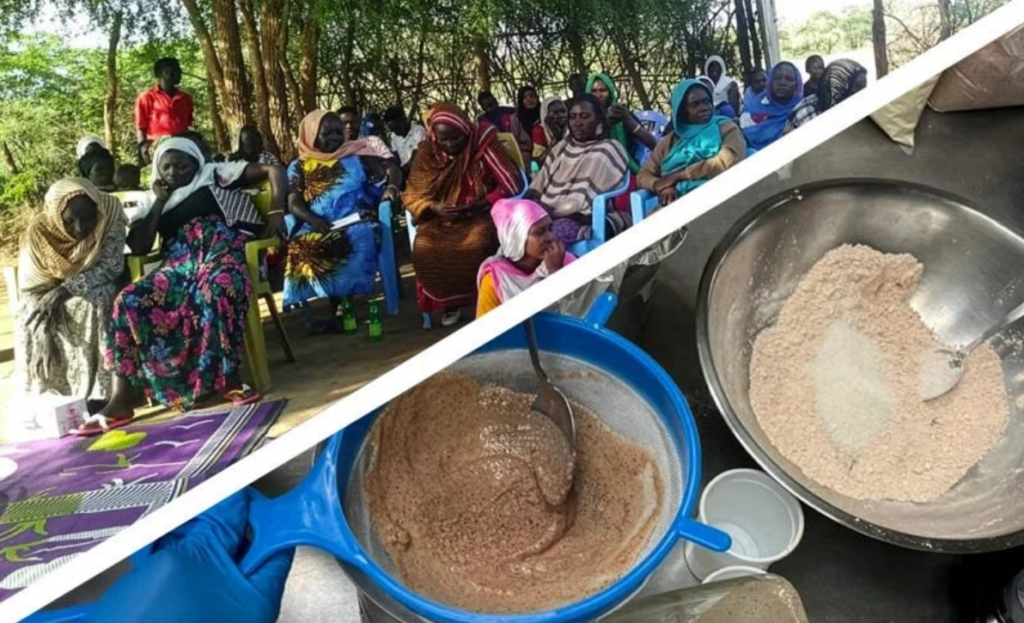
Shaped by their shared experience growing up in Kenya’s Kakuma Refugee Camp, a team of students from South Sudan win 1st Place and $30,000 by transforming one of their home country’s most persistent sources of water contamination into a circular solution to the pressing issue of childhood malnutrition.
In tackling multiple problems that intersect and inform one another, Wege Prize 2026 finalists illustrated exactly what makes layered, complex systemic problems so resistant to solution—and also how working across boundaries and involving diverse perspectives in the process is the key to doing so.
Michigan Sustainable Business Forum members has been a part of the multidisciplinary competition since its launch in 2014. Founded on the belief that socially complex “wicked” problems such as climate change and the liner economy could be addressed through design thinking and collaborative design principles, the competition has shared roots with several Forum initiatives.
Wege Prize founder Gayle DeBryun, Chair of the Collaborative Design program and Chief Sustainability Officer at Kendall College of Art and Design is a member of the Michigan Sustainable Business Forum Hall of Fame, and was an influential chair of the board of the directors and sustainable committees. Wicked problems are issues those issues for which any attempt to grapple with one aspect of the problem inadvertently reveals new layers, obstacles, and challenges (e.g.: hunger, poverty and environmental degradation).
Seeding Biomaterials in Michigan, the Forum’s partnership with international bio-based materials accelerator Materiom, was initially facilitated through the Wege prize. Materiom Co-CEO and founder Alysia Garmulewicz is a Wege Prize judge, one of several global sustainability leaders that have been introduced to West Michigan stakeholders through the competition.
Wege Prize 2026
Learn more about Wege Prize 2026 here: https://www.wegeprize.org/news/meet-the-winners-of-wege-prize-2026
Seeding Biomaterials
Food scraps, surplus food, byproducts and other residuals from farms and food businesses that are currently being disposed of through municipal solid waste, land application or left unharvested have the potential to reshape Michigan’s economy through regenerative design practices that utilize biomaterials and closed loop manufacturing.
Learn more about Seeding Biomaterials aquí.