Safe & Sustainable Foodware Series: Introduction to Reusable Foodware Products
February 13, 2026
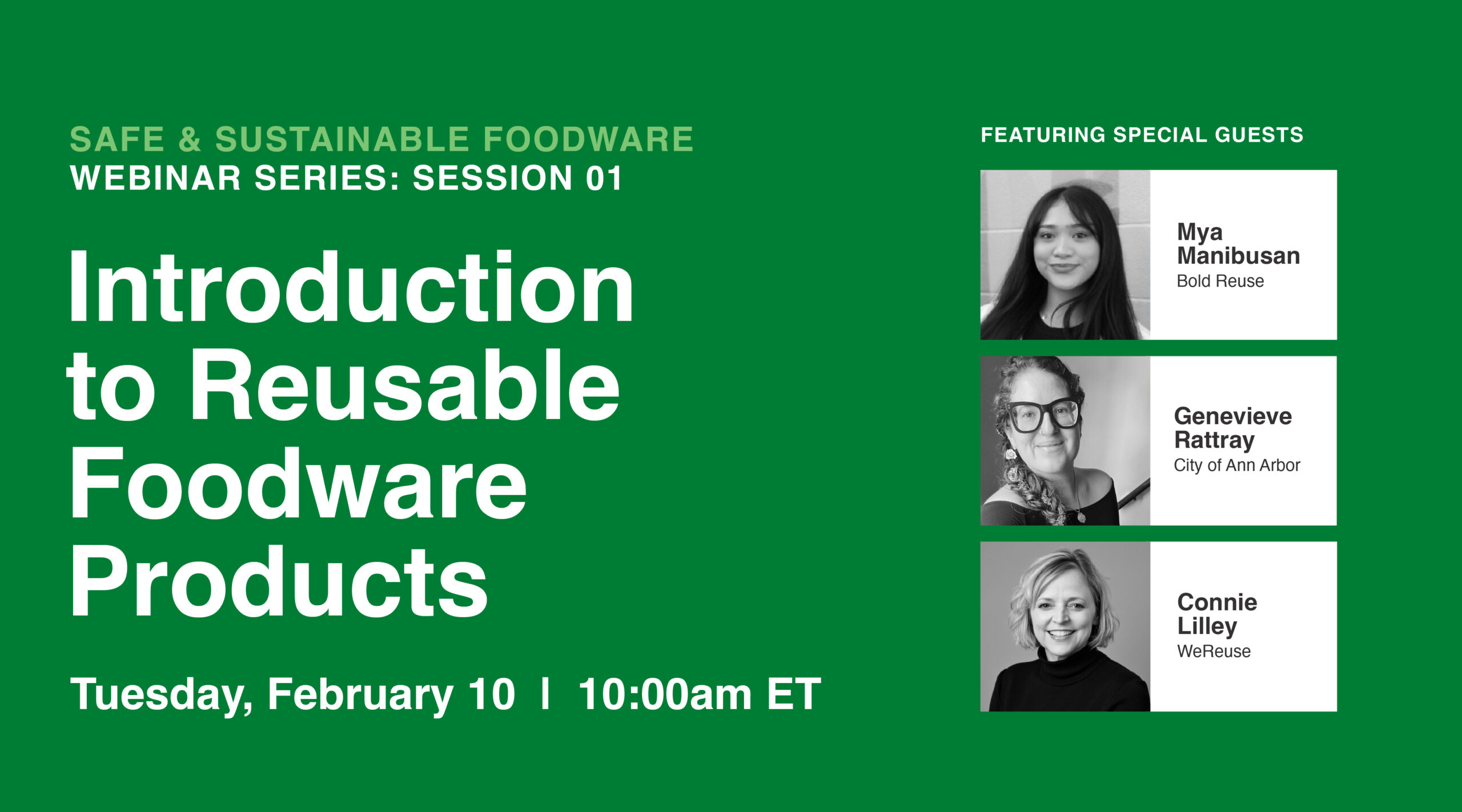
Vajilla segura y sostenible: Introducción a los productos de vajilla reutilizables explores how reusable foodware systems can reduce waste, limit exposure to harmful chemicals, and support circular economy goals.
Él Recipientes para alimentos seguros y sostenibles webinar series will equip restaurants, institutional food service providers, business associations, and community partners with the knowledge, tools, and resources to adopt reusable or certified-compostable food service products.
Each session explores a critical piece of the solution, from understanding health and environmental risks, to navigating product certifications, to engaging staff and patrons in sustainable practices. Participants will hear from early adopters, industry experts, and peer institutions, gaining practical strategies for overcoming challenges and advancing safer, certified-compostable, and reusable alternatives.
This session explores the growing field of reusable foodware systems for both dine-in and takeout operations. Learn about product types, service models, and logistics for implementing reusables in restaurants, cafeterias, and institutions. Presenters will share examples from pilot programs and discuss how reusables can reduce costs, cut waste, and meet customer expectations for sustainability.
La serie está financiada por las Subvenciones para la Prevención de la Contaminación del año fiscal 23-24 de la Agencia de Protección Ambiental de los Estados Unidos (EPA): Justicia Ambiental a través de Productos más Seguros y Sostenibles, a través del Instituto de Ciencias y Políticas Ambientales (IESP) de la Universidad de Illinois en Chicago. Es posible que los trabajos de los beneficiarios de las subvenciones no hayan sido revisados formalmente por la EPA y no reflejen sus opiniones y políticas. La EPA no avala las marcas comerciales ni recomienda el uso de los productos comerciales mencionados en estos documentos.
Objetivos de aprendizaje:
- Learn about product types, service models, and logistics for implementing reusables in restaurants, cafeterias, and institutions.
- See examples from pilot programs and how reusables can reduce costs, cut waste, and meet customer expectations for sustainability.
- Explore the growing field of reusable foodware systems for both dine-in and takeout operations.
Altavoces:
- Connie Lilley, directora del territorio de Michigan y coordinadora de escuelas ecológicas, We ReUse
- Mya Manibusan, gerente de marketing de Bold Reuse
- Genevieve Rattray, Gerente de Sostenibilidad e Innovaciones, Ciudad de Ann Arbor
Key Themes
While many organizations recognize the environmental benefits of compostable and reusable products, operators often face barriers including cost, logistics, vendor relationships, and uncertainty about performance. The webinar series aims to address these challenges by sharing real-world case studies, implementation strategies, and technical insights from early adopters.
In this session, speakers emphasized that reusable foodware systems are a practical pathway toward waste prevention, climate mitigation, and safer materials management.
- Successful implementation requires collaboration among businesses, governments, service providers, and consumers.
- As interest in circular economy solutions continues to grow, reusable foodware programs offer a scalable strategy to reduce environmental impact while supporting operational efficiency and public health.
- Through continued education, technical assistance, and cross-sector partnerships, initiatives like MISBF’s Safe and Sustainable Foodware series are helping organizations navigate the transition toward a more resilient and sustainable food service system.
Reuse as a Scalable Waste Prevention Strategy
Bold Reuse operates reuse programs in multiple U.S. cities and has helped divert more than six million single-use items from landfills. Marketing Manager Mya Manibusen highlighted the growing shift away from disposable foodware toward reusable systems designed to eliminate waste before it is created.
Reusable foodware such as cups, trays, and containers made from polypropylene, stainless steel, or glass functions within a circular system where items are collected, washed, and redistributed for repeated use. Compared to single-use plastics and even compostable products, reusable systems often deliver lower lifecycle carbon emissions, reduced resource consumption, and improved waste diversion outcomes.
Case studies demonstrated reuse at scale:
- At Portland’s Moda Center, a reusable cup program has diverted more than 1.4 million single-use cups since 2023 while achieving return rates near 90 percent.
- Seattle’s Climate Pledge Arena eliminated hundreds of thousands of disposable cups through its reuse initiative, reinforcing that high-volume venues can successfully adopt circular foodware systems.
Health, Environmental, and Economic Benefits in Schools
We ReUse is a veteran and woman founded sustainability company focused on eliminating single-use foodware by providing high quality, American made stainless-steel products.
Michigan Territory Director Connie Lilley emphasized the public health risks associated with plastic and foam foodware, noting that plastics can contain thousands of chemical additives, including substances linked to endocrine disruption and cancer risks. Stainless steel is a durable, chemical-free alternative well suited for schools and institutional kitchens.
School case studies demonstrated significant benefits from transitioning to reusable foodware.
- One Michigan elementary school reduced more than 2,000 pounds of plastic waste annually while saving over $11,000 per year through reduced purchasing and waste hauling costs. Beyond environmental and financial impacts, Lilley emphasized the educational value of introducing reusable systems to students, helping cultivate lifelong sustainable habits.
Building Municipal Circular Infrastructure
The City of Ann Arbor has ambitious circular economy initiatives in its A2ZERO carbon neutrality plan. Ann Arbor’s A2R3 returnable container pilot program demonstrates how municipalities can foster reuse through partnerships with restaurants, institutions, and community volunteers.
Genevieve Rattray, Sustainability and Innovations Manager, noted how early pilot programs revealed strong public interest.
- Convenience and infrastructure are essential for widespread adoption.
- Ann Arbor is exploring a citywide reuse system featuring centralized washing facilities, standardized containers, and accessible checkout programs.
- Although a major funding proposal was not awarded, the city continues advancing feasibility studies and community partnerships to scale reuse infrastructure.
Acerca de Soluciones de Economía Circular
Las prácticas de economía circular industrial se centran en mantener los materiales en uso, desarrollar mercados finales locales y reducir la dependencia de los vertederos. MiSBF promueve estas prácticas porque reducen el impacto ambiental, fortalecen las cadenas de suministro regionales y ayudan a las empresas a alcanzar sus objetivos de sostenibilidad sin perder competitividad.